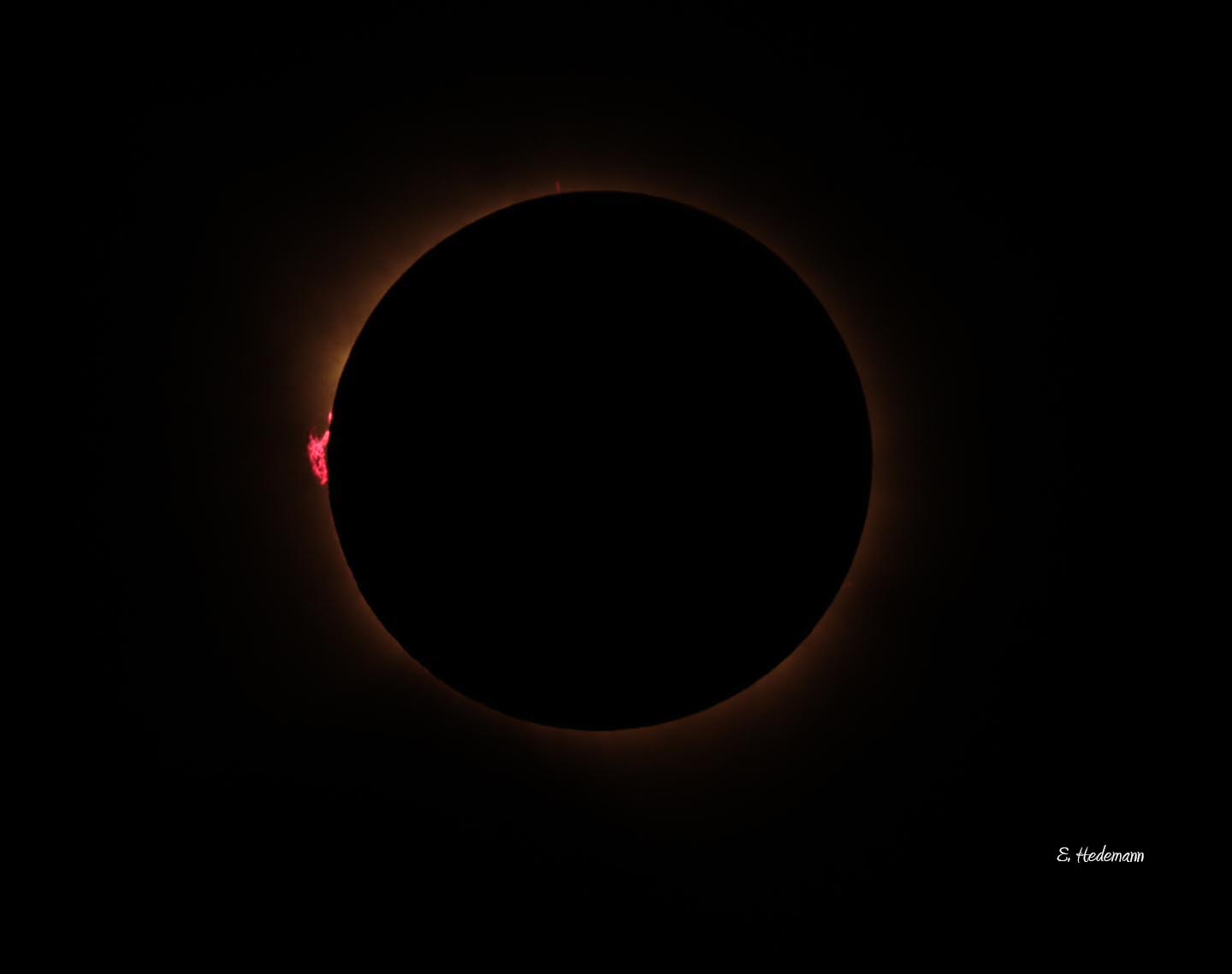
Eclipse in Spain
Was Mainly in the Plain
12 August 2026
Riaza, Spain
Unless otherwise noted, text and photos by Ed Hedemann (click on photos to enlarge)
The sky was perfectly clear for the eclipse, which we viewed 80 miles north of Madrid in Riaza (pop. 2,000, elevation 4,000 feet). It was selected by eclipse chasing friends Peter and Pamela who spent several days scouting out potential viewing sites, and invited us to join them for the drive there.
Like most of Spain in mid-August, Riaza was very hot (in the 90s) but dry. When we arrived on the outskirts of town 3 hours before first contact, about a dozen eclipse watchers were already set up on the edge of a large field with a clear western horizon and, most thankfully, abutting a stand of trees, which provided relief from the oppressive heat. Also, fortunately, as totality approached, the temperature began dropping, eventually getting to 78 F.
At 8:30 pm local time, totality came only 45 minutes before sunset. While we saw 1st, 2nd, and 3rd contacts, the 4th contact — when the moon completely uncovers the sun — occurred after the 9:14 pm sunset.
During the inevitable traffic jam back to Madrid, around midnight Ruth spotted a meteor out of her car window. Coincidentally, that night was the height of the Perseid meteor shower and there was no moon in the sky to spoil the view. The moon had done its job 4 hours earlier.
All photos of the eclipse were taken (aside for the setting eclipse, partial phases required an aluminized solar filter) using 600 mm lens (300 mm f/2.8 plus 2x extender) and Canon EOS 5D Mark IV camera.
THE CHRONOLOGY |
|
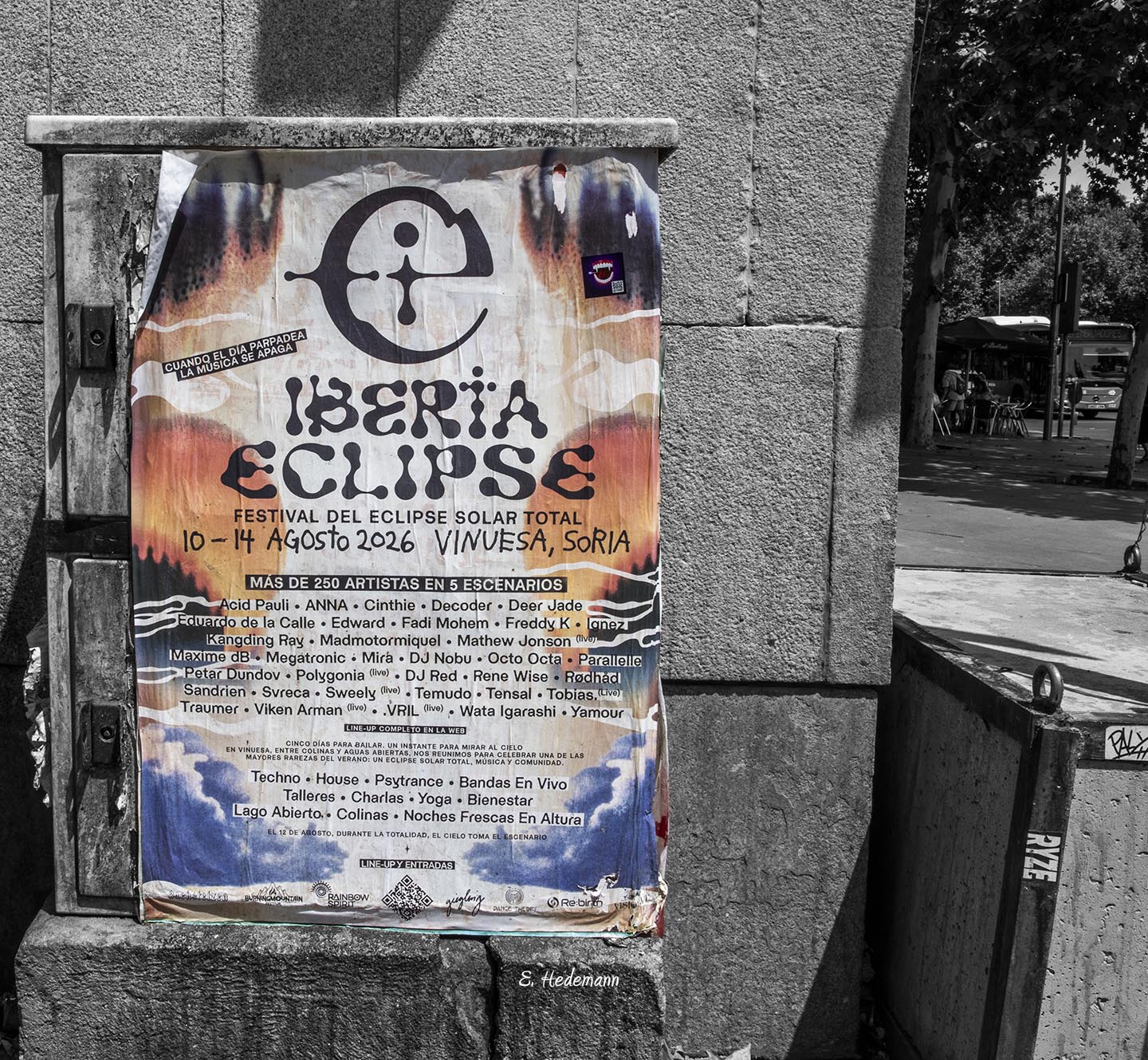 |
Aside for signs in stores saying they were sold out of eclipse glasses, there were surprisingly few posters advertising the eclipse in Madrid or even in towns along the eclipse path. Here's one of the few we spotted, which was near the Reina Sofia museum in downtown Madrid. |
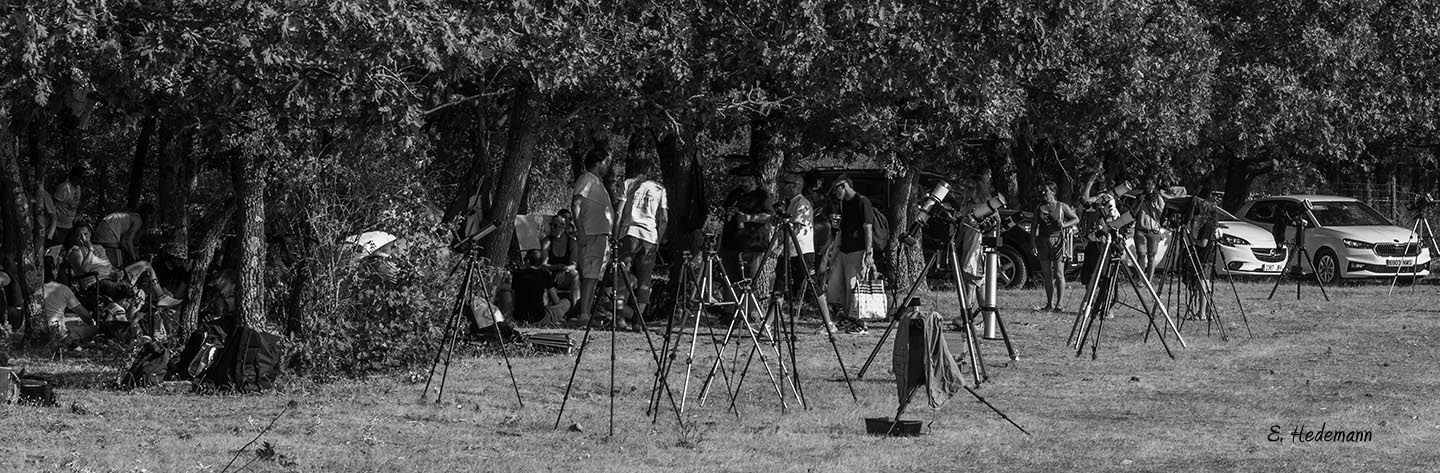 |
Hours before 1st contact, dedicated eclipse chasers had set up their cameras and telescopes mounted on tripods |
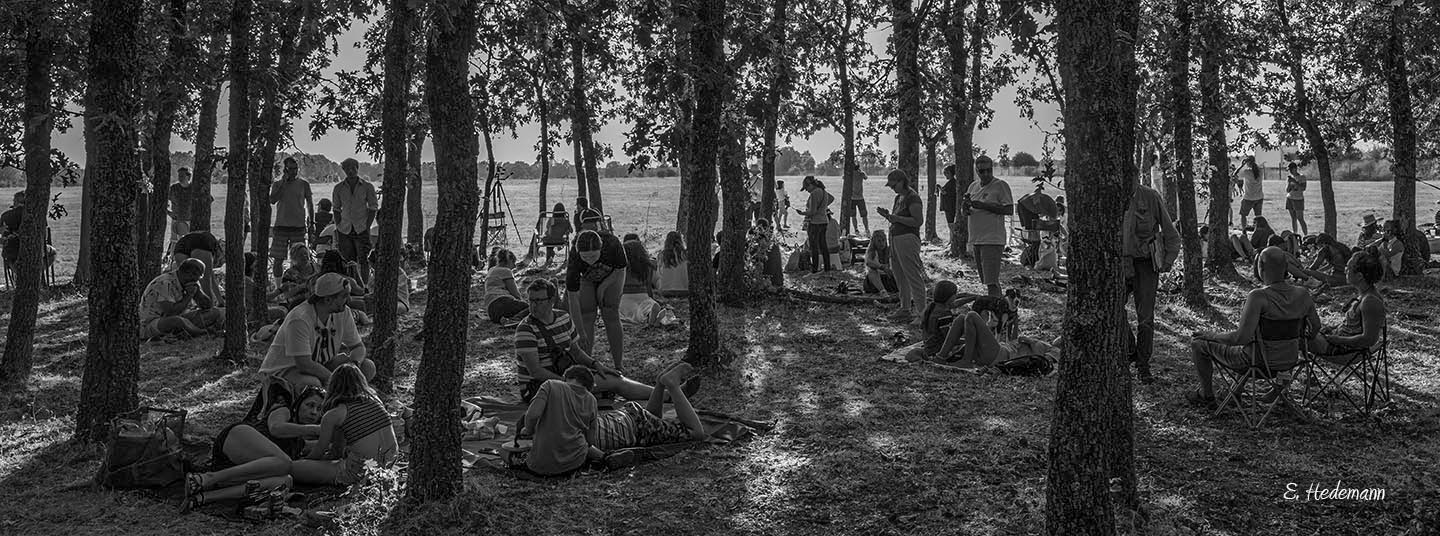 |
Meanwhile, because of high temps, most people waited in the forest (here at 15 minutes before 1st contact) until closer to totality |
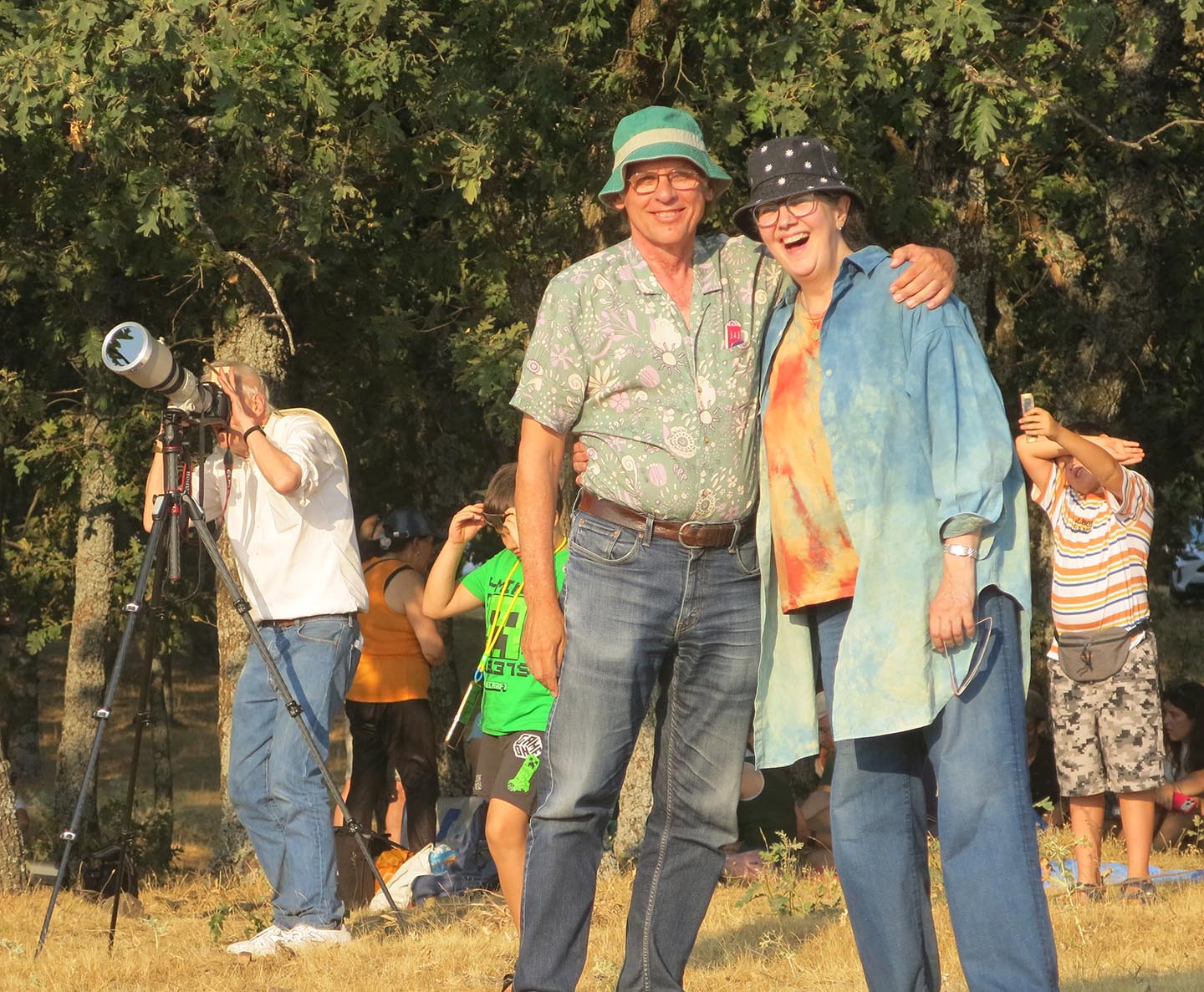 |
Peter and Pamela just before first contact. Ed (far left) looking through his camera and long lens on tripod. Photo by Ruth Benn |
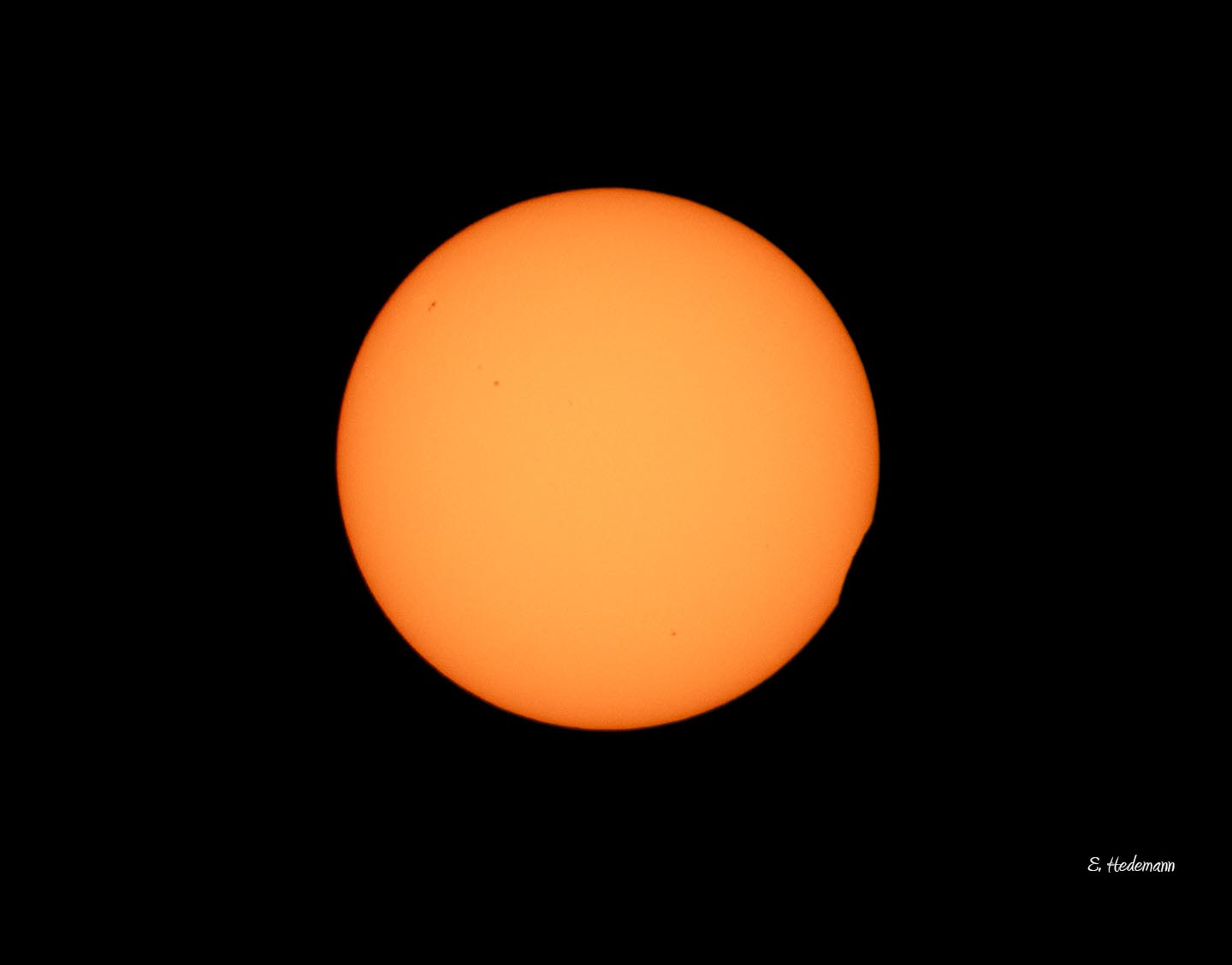 |
At 7:35 pm the shout of "UNO!" could be heard across the field. It was first contact, as the moon began to cover the sun. Note appearance of about a dozen faint sunspots. |
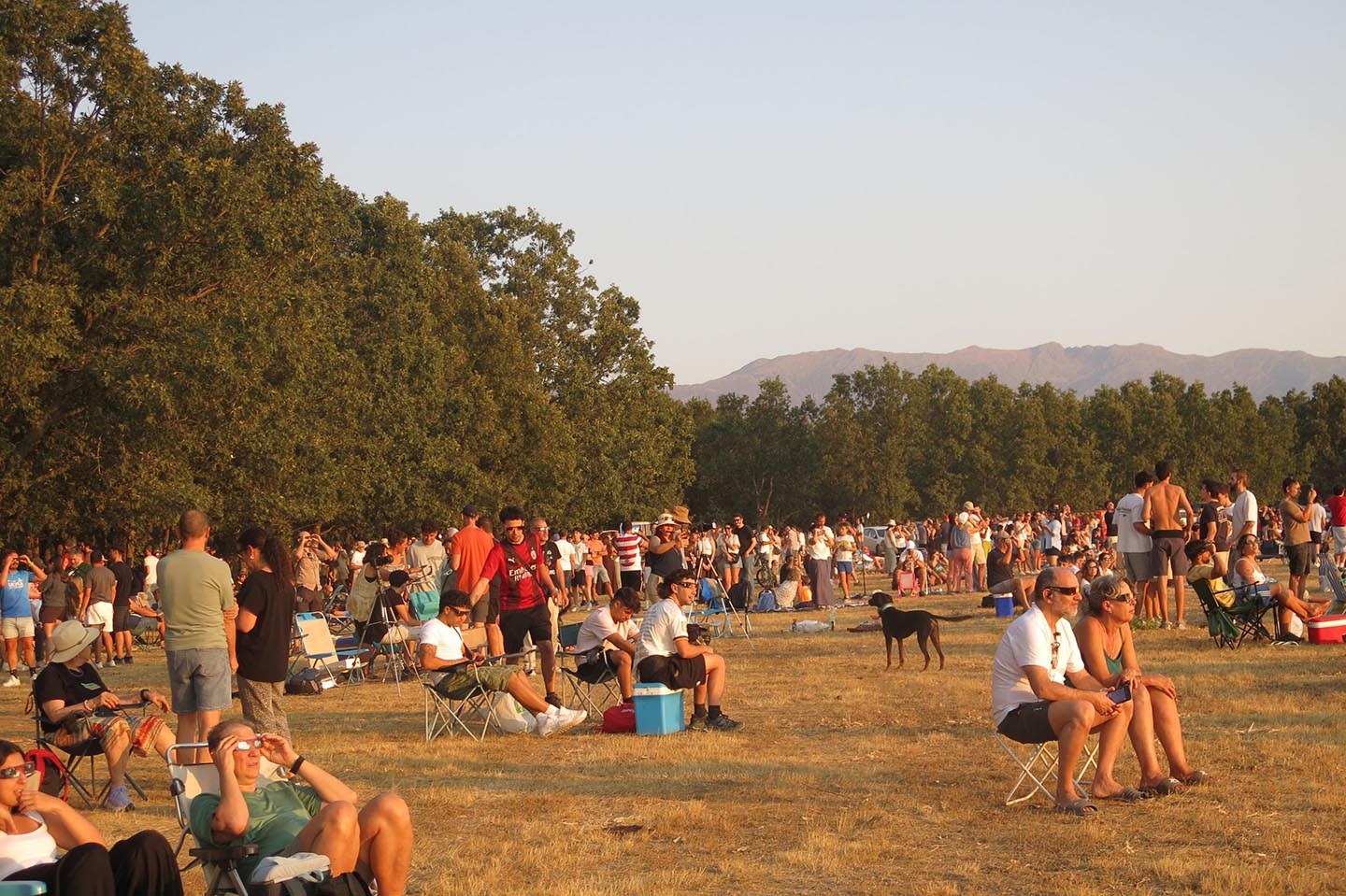 |
Just 7 minutes before totality the light continued to dim as the shadows eerily got sharper. Photo by Ruth Benn |
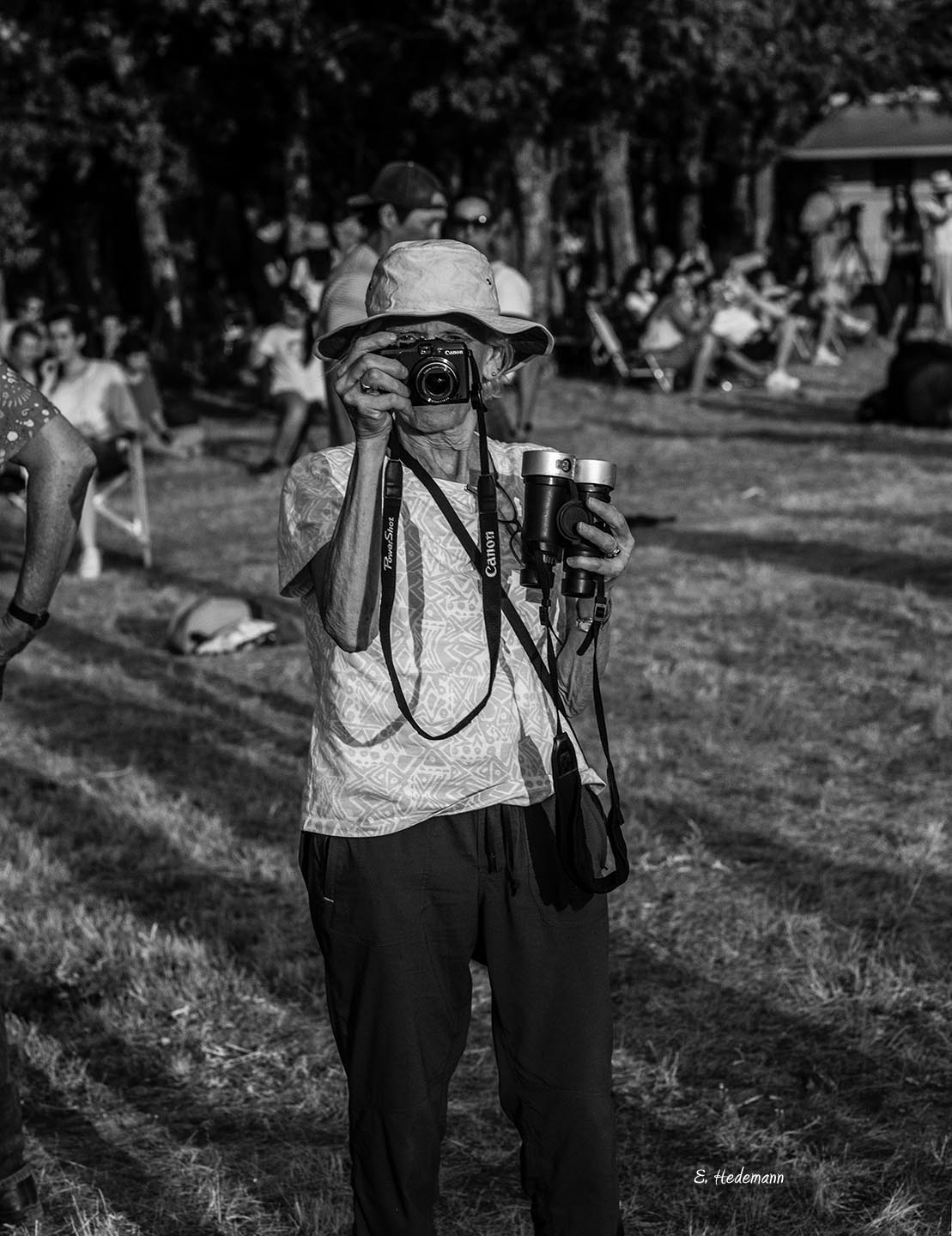 |
With totality only 6 minutes away, Ruth had necessary hardware in hand |
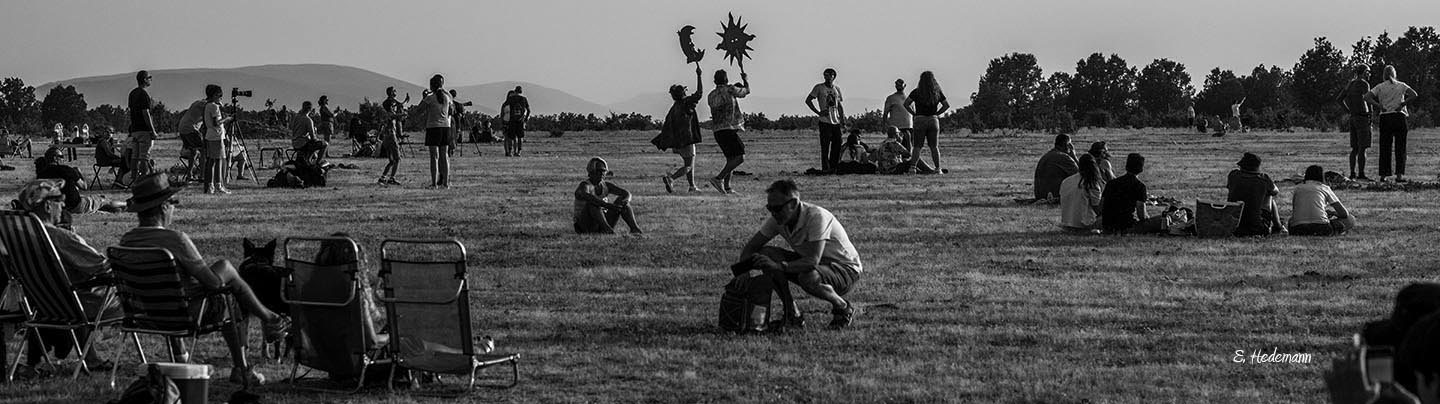 |
With 5 minutes until totality, everyone had abandoned the trees for the open field |
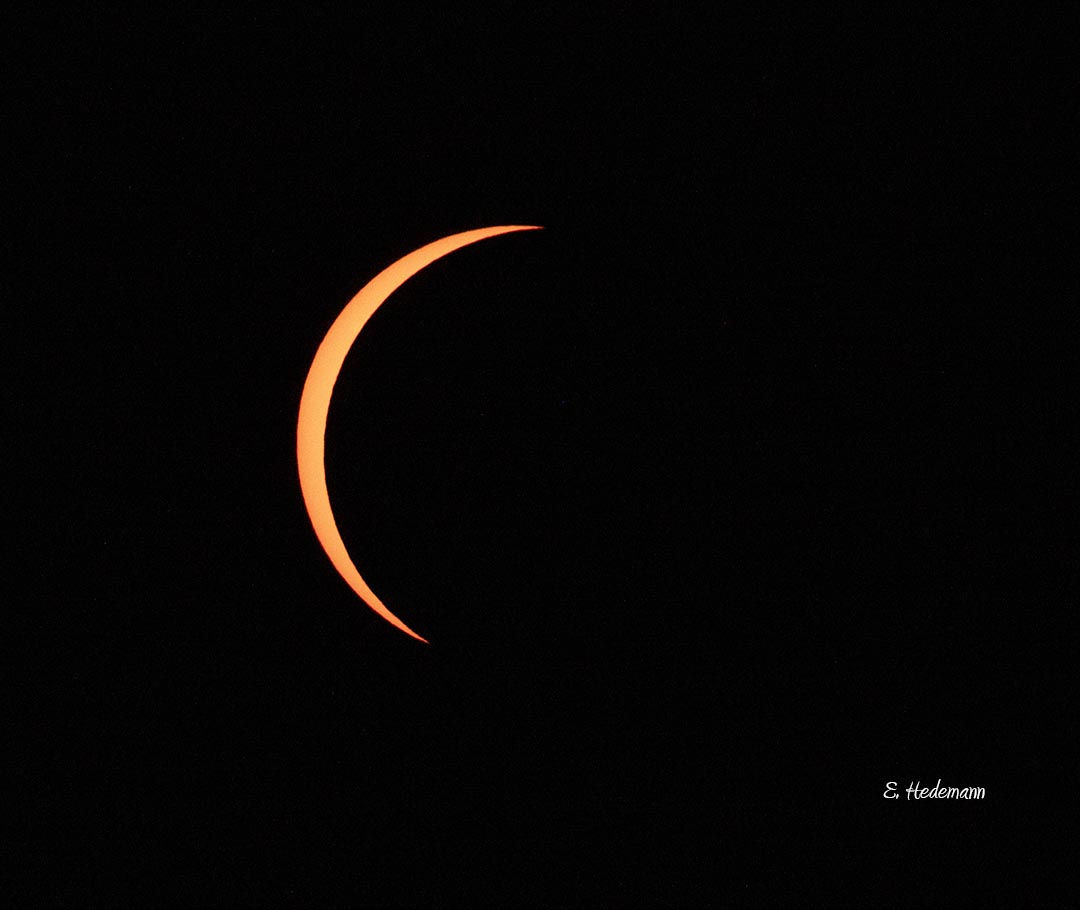 |
At 8:26 pm just a sliver of the sun remained and would completely covered by the moon in 3 minutes. |
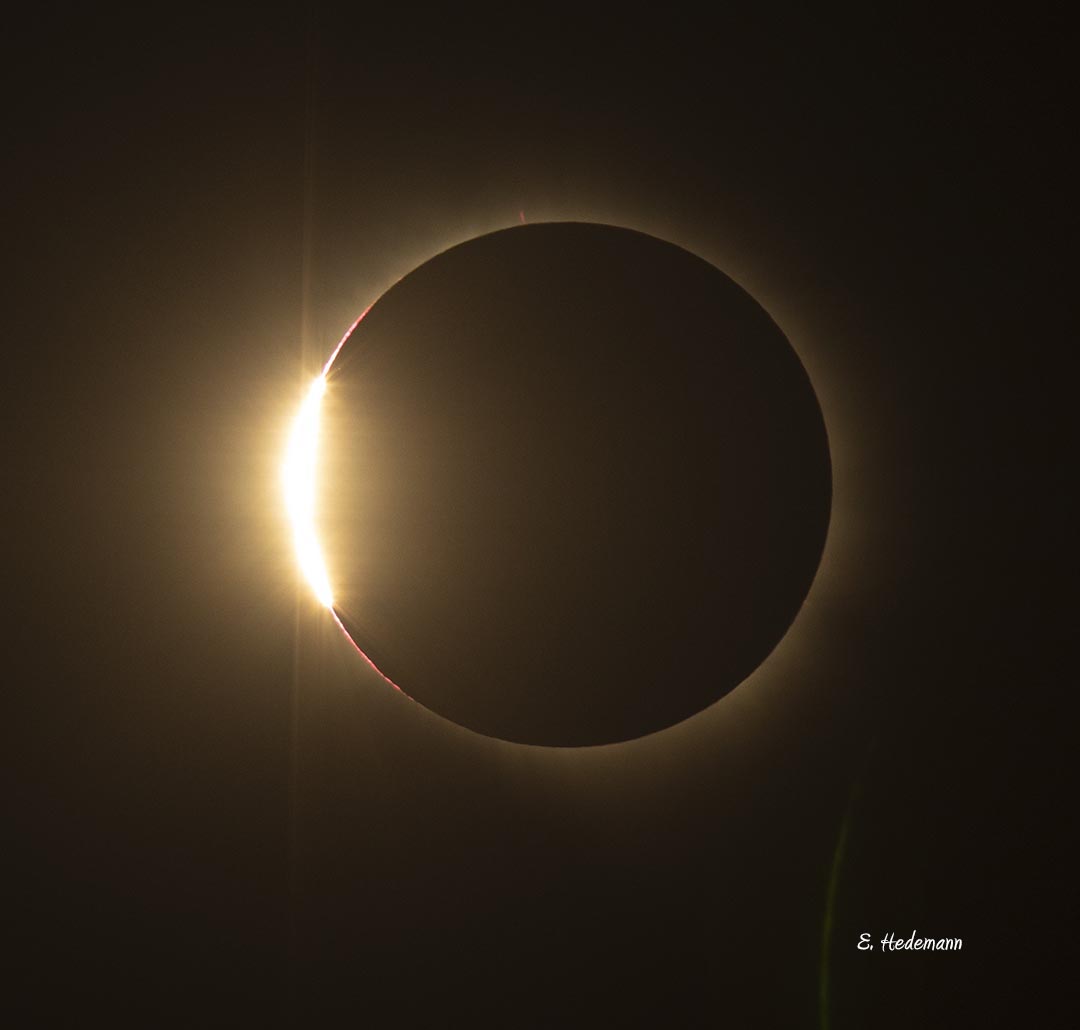 |
The diamond ring effect appeared as the moon was about to completely cover the sun, thus beginning totality |
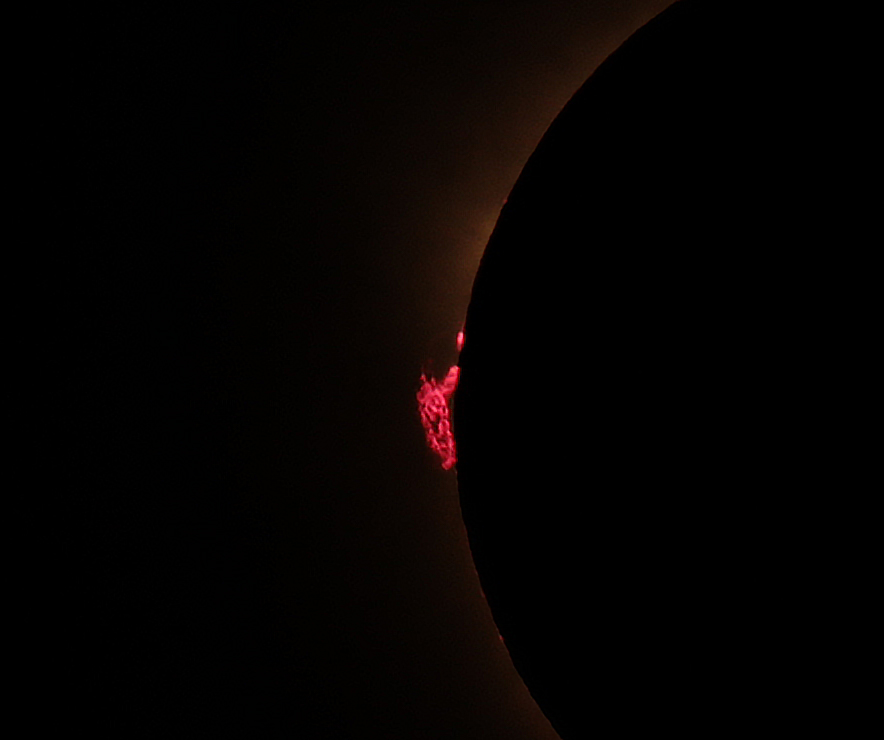 |
Close up of a huge prominence, which was several times the size of the Earth |
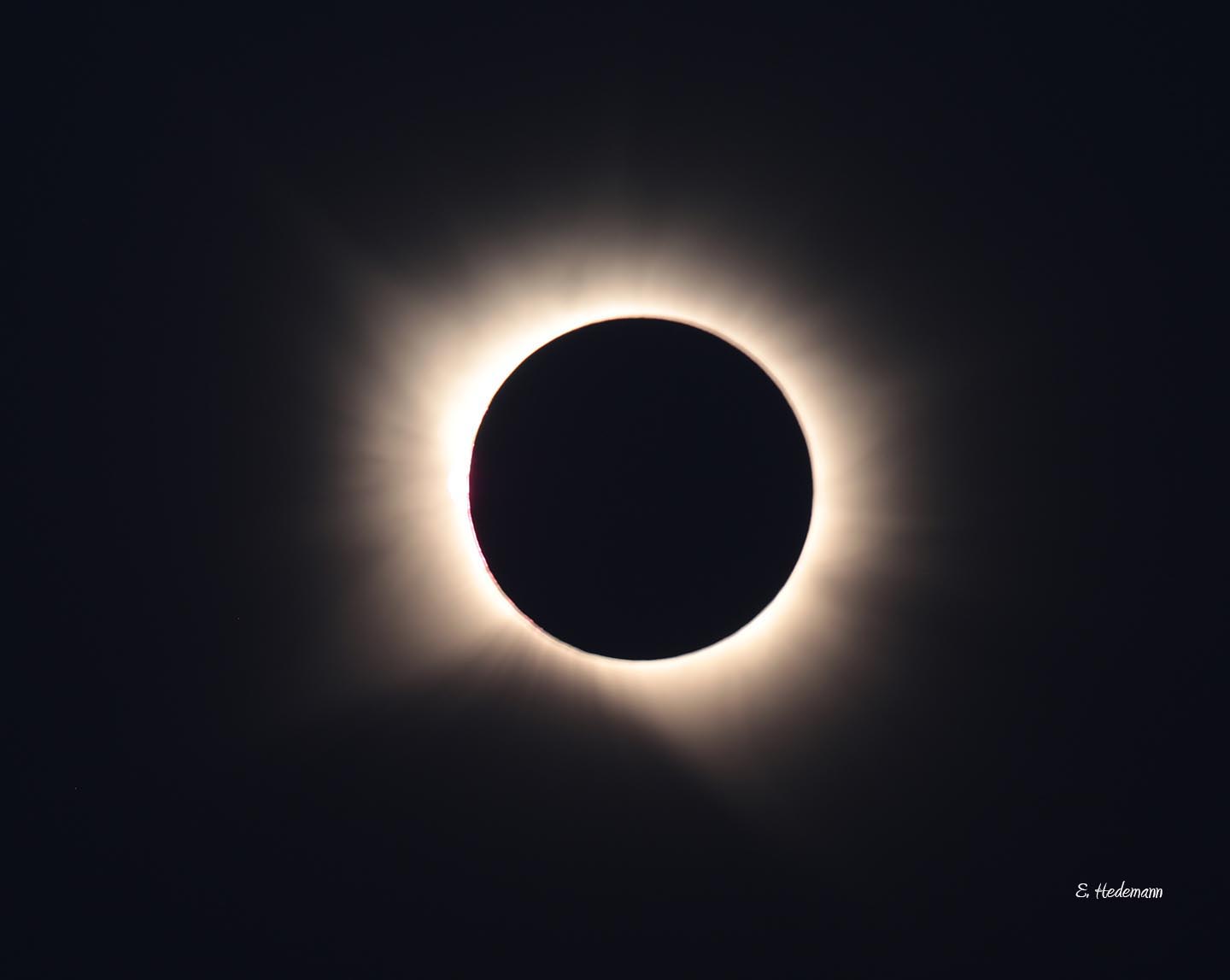 |
The full corona of the sun |
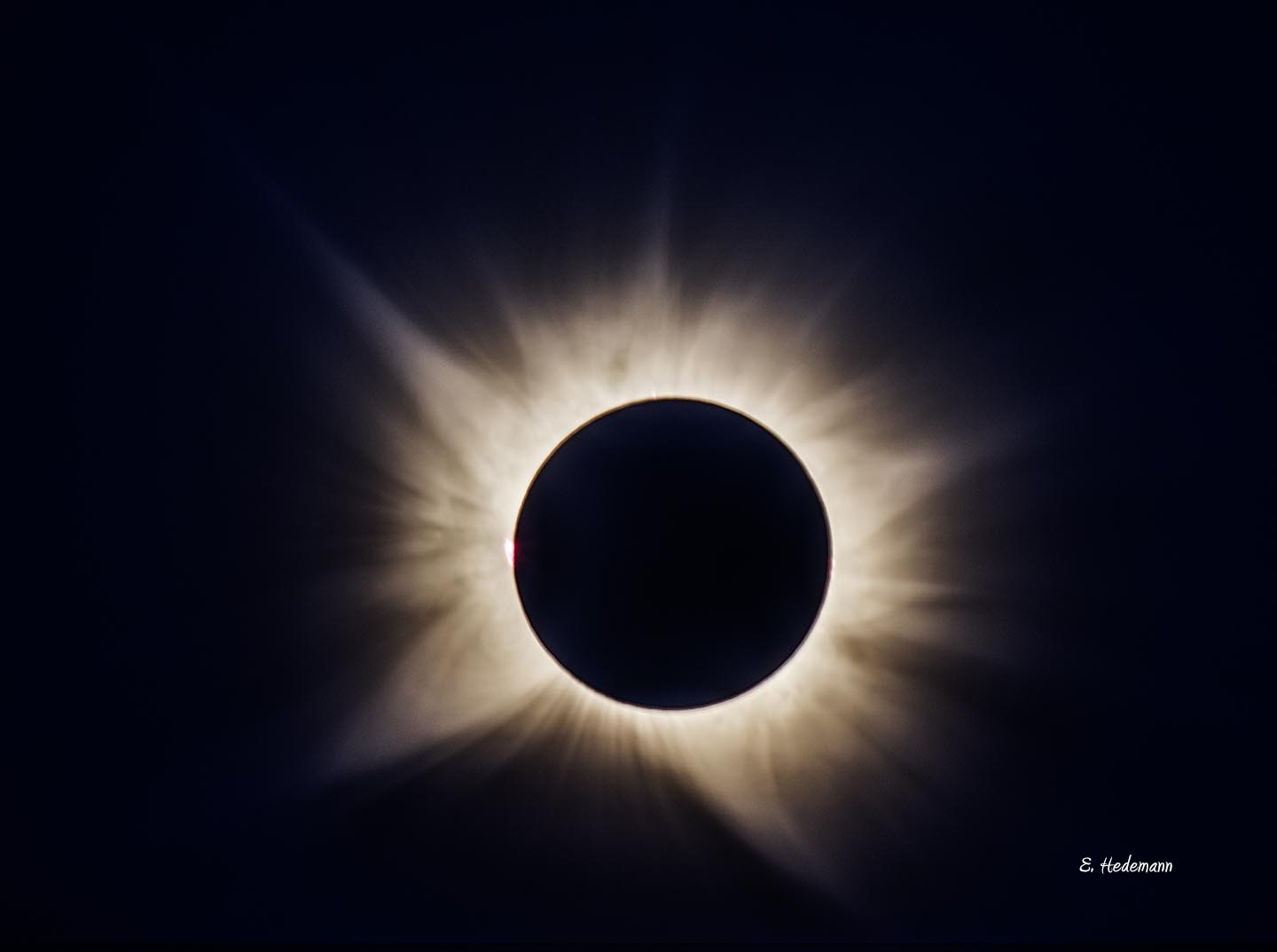 |
In order to reduce noise and bring out the detail in the corona, five images of the eclipsed sun were taken in rapid succession then later stacked together with an image processing program. |
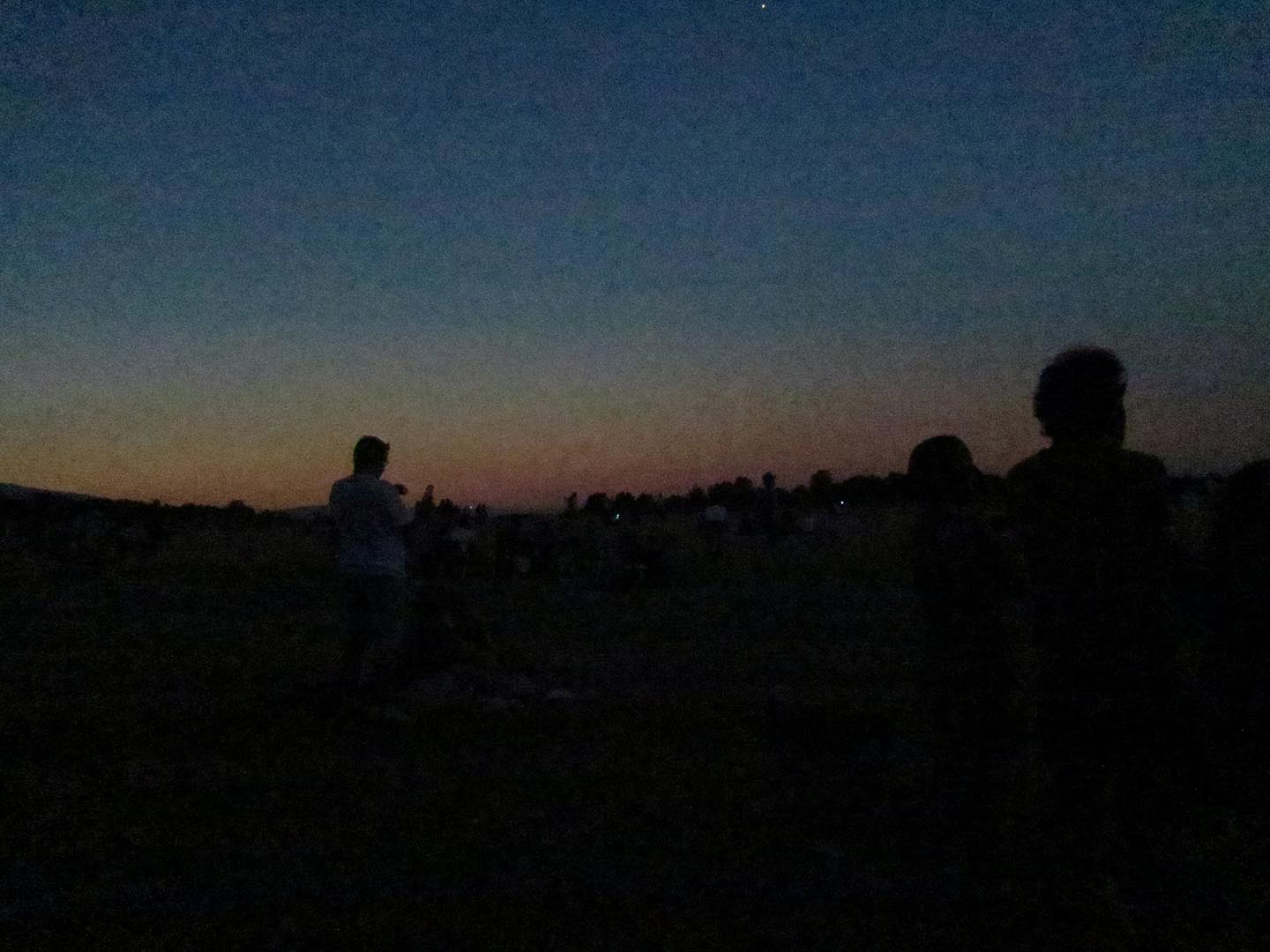 |
The sky as it appeared during totality. Photo by Ruth Benn |
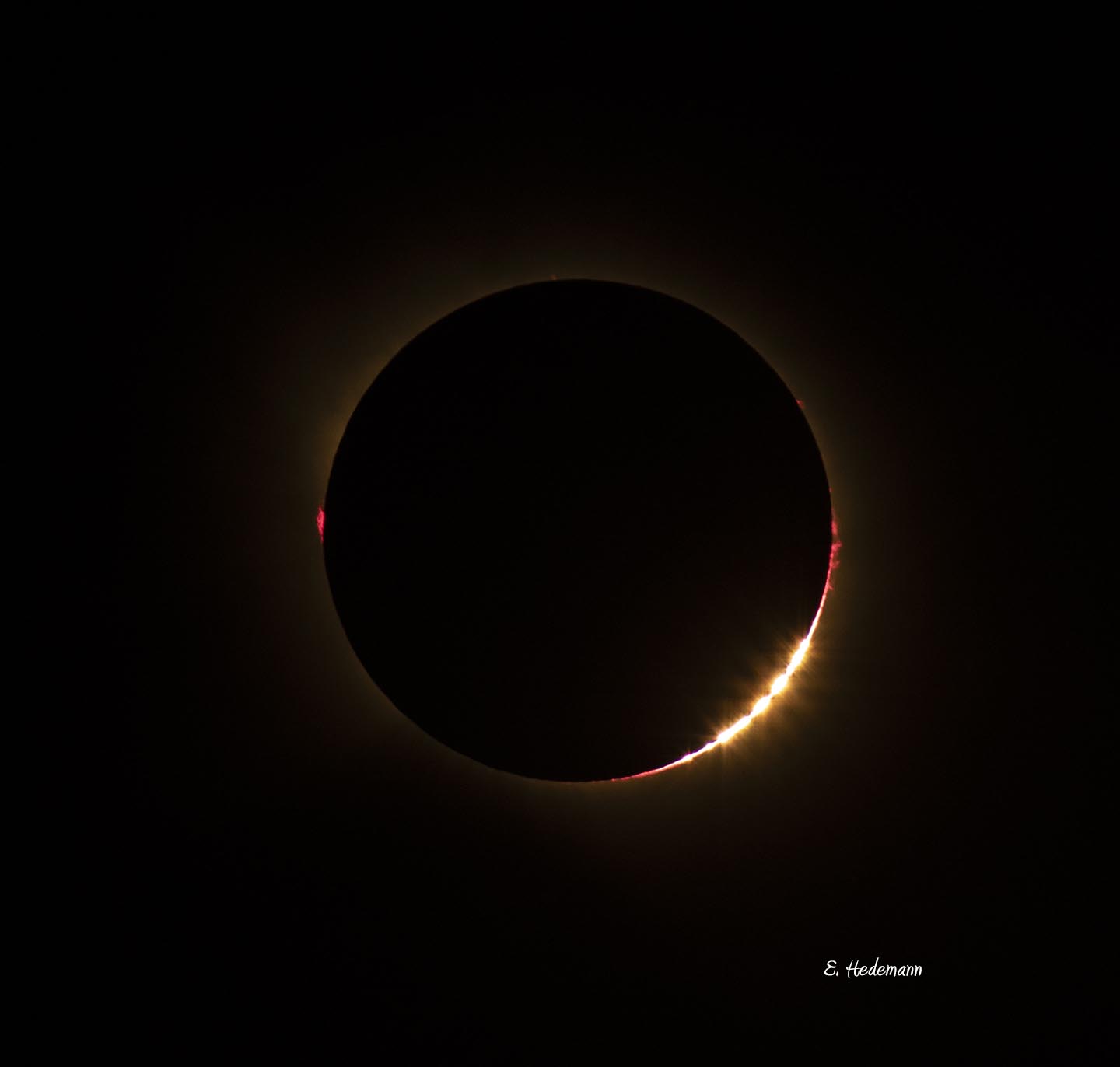 |
Baily's beads along with several prominences appeared at 3rd contact as totality ended and the moon began to uncover the sun |
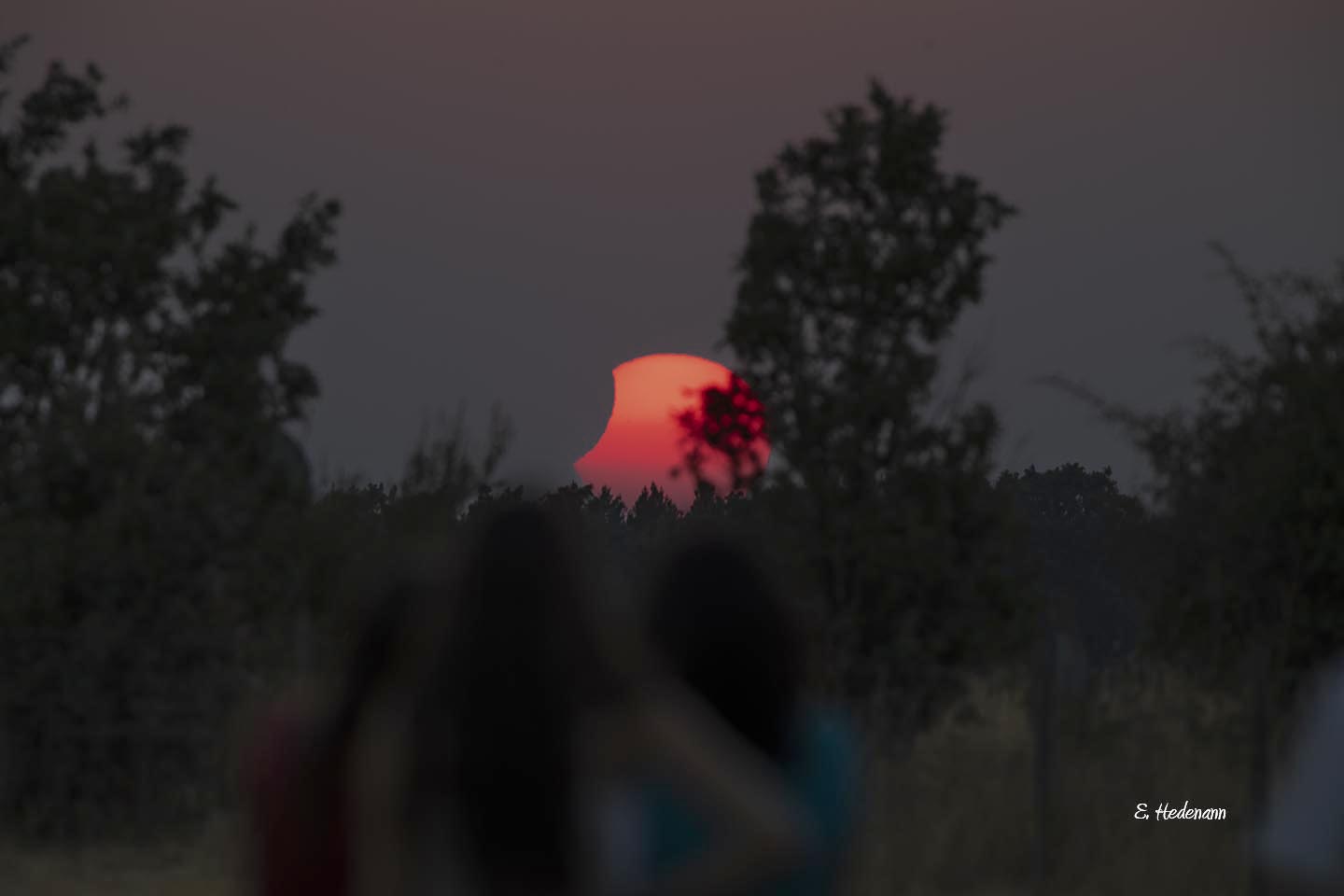 |
Because 4th contact — when the moon completely uncovers the sun — occurred after sunset, the partially eclipsed sun went below the horizon. Photo was taken without need of a solar filter because of atmospheric density and distant haze |
|
|
|
|
|
|
NEXT TOTAL SOLAR ECLIPSES
2027 Aug 2: Spain, Morocco, Algeria, Tunisia, Libya, Egypt,
Saudi Arabia, Yemen, Somalia; max 6m 23s
2028 Jul 22: Australia, New Zealand; max 5m 10s
|